Cow’s milk protein allergy (CMPA) or dairy allergy has become extremely common these days. It was unheard of 10 years ago or probably not well recognised. Even now we see patients with cow’s milk protein allergy who are missed for a long time. They are being treated as baby eczema, a bit of reflux, sometimes constipation, sniffly/congested all the time, but without improvement, as they fail to get the right treatment, which is mainly elimination of cow’s milk from the diet
We don’t know why the incidence has gone up so much but there are several theories, like Hygiene Hypothesis etc. or just an increase in the awareness of the condition. The human body recognises cow’s milk as a foreign element leading to a full-body reaction in a baby manifesting between the ages of six to eight weeks ie around one to two months ie 4-6 weeks of age. The symptoms start as reflux which is getting worse over time and not improving despite feed thickeners like Gaviscon infant or Carobel.
The stools are sometimes runny or soft and over time the baby starts to strain a lot when opening his or her bowels. If it’s left untreated, there may be blood/mucus in the stools. These babies do not poo regularly and sometimes may be diagnosed with constipation but the poo is still runny. Slowly the skin starts to get dry or eczema keeps getting worse and cradle cap develops. The baby is often treated with multiple moisturisers and sometimes steroid creams, which help, but eczema returns as soon as the steroids are stopped
If the allergy is mild the baby may be putting on weight but after some time the weight starts to get static, in severe cases. These babies are most often very uncomfortable especially after feeds as they might have acid reflux or silent reflux which may not be visible as vomiting after feeds.
There are two types of cow’s milk protein allergy. The first one is called IgE mediated in which the presentation is slightly different. When the baby’s first given formula or cow’s milk in some form, they react severly, with rash around the face, vomiting and sometimes difficulty in breathing. Luckily, this type is not very common.
Most of the cases are non-IgE mediated with a slow onset of symptoms as described above. These babies are often congested and their nose is always blocked. It doesn’t seem to get better with saline drops. As they are non-IgE mediated there is unfortunately no test to diagnose this. The best diagnosis is by elimination of cow’s milk from the diet and slow resolution of symptoms between two to four weeks.
It does takes at least two weeks before the symptoms get better, because the cow’s milk that is already in babies’ and mothers’ body, takes time to get eliminated from the body. Slowly the symptoms improve and within four weeks most of the baby’s symptoms are much better. The clinical condition improves, including the skin, reflux and the loose stools then they start to put on weight as per their potential.
Treatment is by eliminating of dairy from the mother’s diet if they are breastfed. That includes the elimination of cow’s milk, yoghurt, cheese and milk chocolate. The mothers can drink plant-based formulas like Oat, coconut, or almond. We do not recommend soya as below six months of age, 1/3 of the cases of cow’s milk protein allergy can also be allergic to soy.
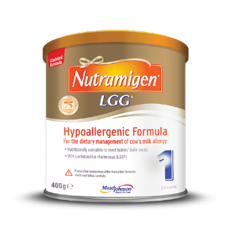
If they are formula-fed, the milk has to change to a hypoallergenic formula, which is also known as extensively hydrolysed formulae. The milk is broken down into smaller protein chains which do not cause a reaction in the baby’s body and 90 to 95% of the cases improve with this formula.
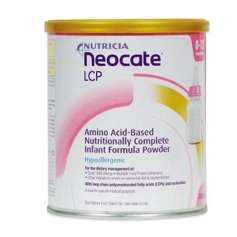
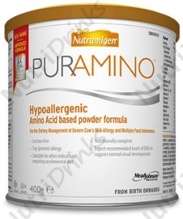
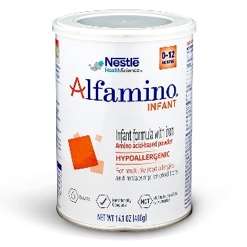
Some babies who have severe cow’s milk protein allergy may need to go on an amino acid formula, which is further broken-down protein chains into individual amino acids.
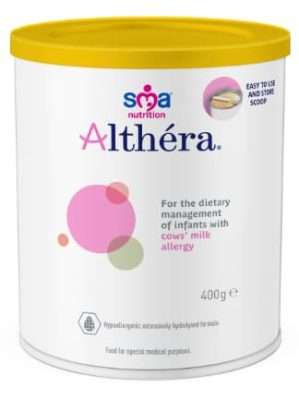
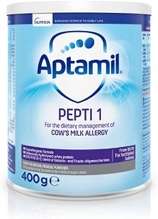
Examples of extensively hydrolysed formulas are Nutramigen, Similac Alimentum, SMA Althera and Aptamil Pepti. The amino acid formulas are Neocate, Alfamino, Puamino and Elecare. They are prescription-only formulas, although they are becoming available on Amazon and other pharmaceutical websites but are very expensive.
The major problem with these formulas is that the taste is not great, as they are broken down chains. Younger babies less than 2 months are ok with it but if the child is older, their taste buds are well developed and it becomes a bit difficult for them to get used to the taste of these formulas.
I advise adding a little bit of vanilla extract (1-2 drops to a bottle of milk) to make it a bit more palatable. After one year of age, there is a tastier formula called Neocate junior, which comes in vanilla, strawberry or chocolate flavour and children tolerate it better. After the age of 1 year, they are also advised to try oat milk which is the most nutritionally complete plant-based milk as compared to cow’s milk. Goat milk is not recommended as it has the same proteins as cow’s milk and will not lead to improvement in symptoms although it is slightly better tolerated by some babies.
These children should be monitored by a dietitian as they will have to be given a nutritionally adequate diet and the weaning has to be cow’s milk protein-free. I usually advise them to be weaned at four months of age rather than six months as advised by WHO currently. There is evidence that the sooner they’re introduced to allergenic food, the risk of them being allergic to that food (specially peanuts) goes down significantly by the age of five years. Weaning them early also helps with reflux and quicker weight gain.
Most babies with a non-IgE mediated allergy will grow out between the ages of one to two years but IgE mediated allergy will take time to grow out of. We introduce milk into the babies with non-IgE mediated CMPA via a ‘MILK LADDER’, around 9 months of age, under dietician supervision.
First-line milks (Extensively Hydrolysed formulae)

Second line formulae (Amino Acid formulae)